Elixir Logistics Elixir Logistics

Top 10 Logistics Efficiency Improvements for Modern Warehouses

Time:2026-10-16 Author:Madeline
0%

Modern warehouses face rising order volumes, tighter delivery windows, and constant pressure to control operating costs. Logistics Efficiency Improvements For Modern Warehouses offer practical ways to strengthen daily performance without relying on expensive automation alone. A well-organized facility may reduce walking distances, improve inventory accuracy, and keep loading bays moving steadily.

Small changes often produce visible results. For example, clearly marked pick paths can prevent repeated backtracking between storage aisles. Barcode scanning at receiving can expose quantity errors before products reach active stock. Adjustable shelving, safer pallet positions, and cleaner staging areas also support faster, more consistent work. These details matter during a busy afternoon, when one misplaced carton can delay several customer orders.

However, no warehouse improvement works perfectly on paper. A process that succeeds in a large distribution center may create congestion in a smaller site. Staff may also resist a new layout if managers ignore practical experience from the floor. Measure before changing. Use order data, travel-time observations, and employee feedback to identify genuine bottlenecks. Then test improvements in one zone before expanding them across the facility. Results should include safety, accuracy, labor effort, and delivery reliability, not speed alone. Experienced warehouse leaders understand that efficiency is not a single project. It is a continuous discipline shaped by real conditions, clear standards, and honest review. Mistakes will appear. The goal is to detect them early and learn from them.
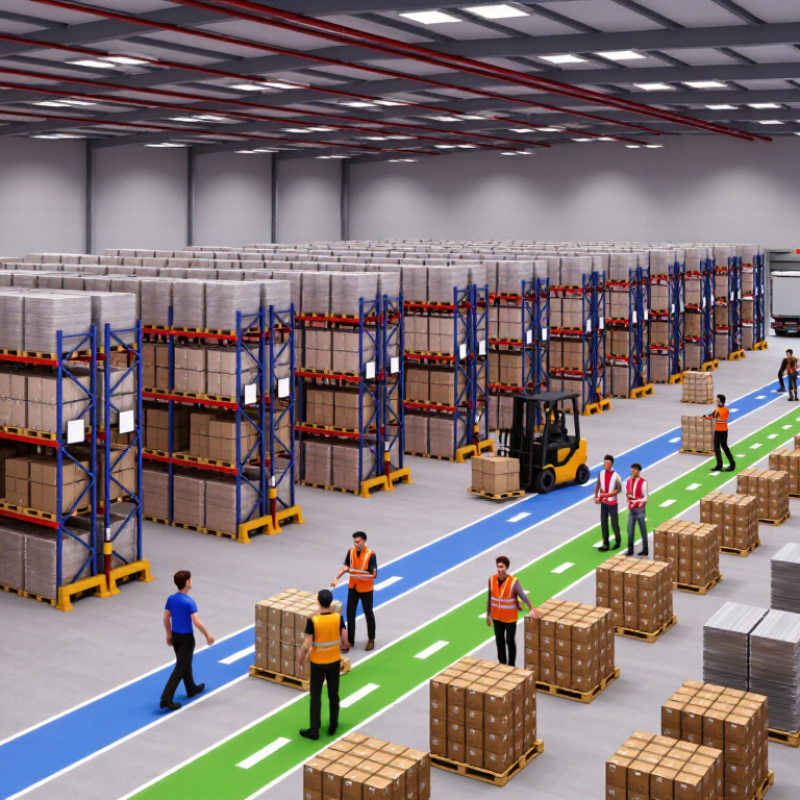
Top 10 Logistics Efficiency Improvements for Modern Warehouses

Assess Labor and Flow; Set KPIs with WERC and MHI Benchmarks

Top 10 Logistics Efficiency Improvements for Modern Warehouses

Labor and material flow should be measured together, not in isolation. A picking team may hit its hourly target while workers lose time walking around blocked aisles. Map each process from receiving dock to shipping door. Record travel distance, waiting time, touches, overtime, and rework. The 2024 WERC DC Measures report places strong-performing operations near 99.8% order-picking accuracy. That figure is useful, but it should not hide fatigue or unsafe shortcuts. Compare your results with the benchmark, then investigate every gap.

Set a small KPI group: lines picked per labor hour, dock-to-stock time, order accuracy, on-time dispatch, and labor turnover. The 2024 MHI Annual Industry Report found that 55% of surveyed organizations planned to increase technology and innovation investment. Technology can improve visibility, but poor slotting still creates waste. A dashboard cannot repair a bad process. Our data may also be imperfect. Cycle counts, time studies, and supervisor observations should challenge system reports.

Tips: Measure one representative week before changing layouts. Separate travel delays from replenishment delays. Review KPIs daily, but adjust labor standards monthly. Use WERC benchmarks as reference points, not automatic targets. A warehouse may need slower rates during seasonal peaks. That is not failure. It is a signal to reassess staffing, flow, and service promises.

Re-slot Inventory and Redesign Layout Using WERC Throughput Measures

Re-slotting inventory starts with evidence, not intuition. WERC throughput measures help warehouse teams compare performance across receiving, picking, packing, and shipping. Useful measures include lines per labor hour, order cycle time, dock-to-stock time, and inventory accuracy. Review at least four weeks of data before moving products.

Fast-moving items should sit near the start of the pick path. Heavy cartons belong between knee and shoulder height. Small, frequent items can use forward pick locations near packing stations. Group products often ordered together, but confirm the pattern with order history. A popular item may still create congestion if its location is too close to a narrow aisle.

Layout changes should reduce travel without damaging replenishment flow. Mark temporary locations with clear labels, then measure walking time, pick errors, and aisle blockage. WERC benchmarks provide useful context, not automatic answers. Every facility has different products, staffing, and order profiles. A new layout can improve lines per labor hour while lowering accuracy. That is a warning.

Test one zone first. Compare results with the previous layout and record unexpected delays. Some recommendations will fail in practice. A clean spreadsheet cannot show a picker waiting behind replenishment equipment. Adjust slot sizes, shift replenishment windows, and review the measures again after several operating cycles.

Deploy WMS and RFID; 58% Plan RFID by 2028 (Zebra, 2023)

Modern warehouses are moving from manual counting toward connected inventory control. A 2023 global warehousing study found that 58% of respondents planned RFID adoption by 2028. RFID tags can identify pallets, cartons, and returnable containers as they pass dock doors. A warehouse management system then converts those scans into locations, tasks, and exception alerts. The value is operational, not decorative.

Start with one measurable flow, such as receiving. Place fixed readers near the inbound door, and test handheld scanning in narrow aisles. Track receiving accuracy, search time, and stock adjustments before changing the whole site. The 2024 Annual Logistics Technology Report linked stronger system integration with better inventory visibility, but integration work often takes longer than expected. That part gets underestimated.

RFID is not magic. Metal racks, liquids, damaged tags, and overlapping reads can create false confidence. We have seen teams trust a clean dashboard while physical checks reveal missing cases. Configure read zones carefully, validate master data, and keep cycle counts during the pilot. WMS workflows should also record exceptions, not hide them. Short daily reviews help supervisors compare system events with what workers actually see. Mistakes remain useful, if someone investigates them.

Top 10 Logistics Efficiency Improvements for Modern Warehouses - Deploy WMS and RFID; 58% Plan RFID by 2028

No. Efficiency Improvement Primary Technology or Method Typical Baseline Expected Impact Implementation Horizon Measurement Metric
1 Integrate a warehouse management system Real-time inventory, task, and location control Manual or disconnected records 15–25% higher labor productivity 3–9 months Lines picked per labor hour; inventory accuracy
2 Adopt RFID for item and pallet visibility Electronic identification and automated reads 58% planning adoption by 2028 20–40% fewer manual scans 4–12 months Read rate; scan touches per shipment; inventory variance
3 Use barcode-directed picking Handheld scanning and location validation 97–98% pick accuracy 99.5% or higher pick accuracy 1–3 months Pick accuracy; mis-pick rate; reshipment rate
4 Optimize slotting and storage locations ABC analysis, velocity mapping, and dynamic slotting Long travel paths and static locations 20–40% shorter picker travel 1–3 months Travel distance per order; picks per hour
5 Introduce cycle counting Risk-based, continuous inventory checks Periodic full physical counts Inventory accuracy of 98–99.5% 1–2 months Record-to-floor variance; adjustment value
6 Apply labor and workload planning Demand forecasting and workload balancing Fixed shifts and reactive staffing 10–20% fewer overtime hours 1–3 months Labor utilization; overtime hours; backlog volume
7 Streamline receiving and dock operations Appointment scheduling and advance shipment data Manual dock scheduling 30–50% shorter dock-to-stock time 2–4 months Dock dwell time; receiving cycle time
8 Use pick-path and batch-picking rules Wave, batch, zone, or cluster picking Single-order picking 15–30% higher picking throughput 1–3 months Orders per hour; lines per order; travel per line
9 Automate repetitive material movement Conveyors, sortation, mobile robots, or vertical storage Manual transport and replenishment 20–40% less non-value-added travel 6–18 months Touches per unit; transport time; throughput
10 Digitize packing, shipping, and exception handling Automated weighing, carton selection, and exception alerts Manual verification and paperwork 20–35% faster order cycle time 2–6 months Order cycle time; shipment accuracy; exception closure time

Note: Improvement ranges are commonly reported implementation benchmarks for modern warehouse programs. Actual results depend on facility layout, order profile, process maturity, system integration, and workforce adoption.

Add Automation and Robotics; 55% Plan Adoption (MHI, 2024)

Modern warehouses are moving from manual handling toward measurable automation. MHI’s 2024 Annual Industry Report states that 55% of supply chain leaders plan to adopt robotics and automation. This figure signals intent, not guaranteed success. Managers still need accurate inventory records, stable workflows, and trained operators before adding machines.

Start with repetitive tasks near packing stations, such as carton movement, scanning, and pallet transport. A mobile robot can reduce walking across long aisles, while robotic arms can maintain consistent lifting patterns. The International Federation of Robotics reported 553,052 industrial robot installations worldwide in 2022, a 12% annual increase. Warehouse teams should track travel time, picking accuracy, downtime, and injury risks before and after deployment.

Small tests work better than dramatic replacements. A two-week pilot can reveal blocked routes, poor barcode placement, or software delays. Human judgment remains essential. One weak assumption can disrupt an entire shift. Automation also creates new maintenance demands, and some facilities underestimate spare parts, battery charging, and exception handling. The 2024 MHI report identifies workforce development as a continuing challenge, so operators need practical training at the workstation, not only online instructions. A productive warehouse may still contain manual steps; the goal is controlled flow, not automation everywhere.

Strengthen Safety, Energy, and ROI with OSHA and DOE Benchmarks

Top 10 Logistics Efficiency Improvements for Modern Warehouses

Strengthen Safety, Energy, and ROI with OSHA and DOE Benchmarks

A safer warehouse begins with visible controls, not posters. OSHA’s warehousing guidance highlights struck-by incidents, falls, and material-handling risks as recurring hazards. During floor walks, I check blocked exits, damaged pallets, blind corners, and forklift-pedestrian crossings. These small details often reveal larger process failures. OSHA standards 1910.176 and 1910.178 provide practical benchmarks for storage and powered industrial truck operations. Mark aisles clearly, separate walking routes, and inspect racks weekly.

Energy waste is usually quieter. DOE building research shows that lighting, HVAC, and compressed-air systems can create major efficiency opportunities. Install occupancy sensors in low-traffic zones, repair dock-door seals, and measure electricity by operating area. DOE’s Better Buildings resources repeatedly support energy audits, controls, and equipment scheduling as cost-effective actions. Track kilowatt-hours per order, not only the monthly bill. That metric exposes inefficient shifts and idle equipment. The first audit may feel incomplete. It probably is.

Tips: Start with one aisle. Record near misses, travel time, temperature, and energy use for seven days. Then test one change. The National Safety Council reported $167 billion in workplace injury costs for 2022, showing why prevention affects ROI. However, projected savings can disappoint when training is rushed or data is inconsistent. Review results after 30, 60, and 90 days, and adjust the plan.

Top 10 Logistics Efficiency Improvements for Modern Warehouses

Representative improvement targets aligned with OSHA safety practices and U.S. Department of Energy efficiency guidance.

The percentages show practical annual improvement targets for planning and prioritization, rather than OSHA or DOE regulatory limits. Safety actions focus on stable storage, unobstructed aisles, housekeeping, and documented inspections; energy actions focus on efficient lighting, controls, motors, and HVAC operation. Actual results depend on facility size, operating hours, equipment condition, and baseline performance.

Reference framework: OSHA 29 CFR 1910.22 and 1910.176; U.S. DOE Better Buildings and Federal Energy Management guidance for commercial and industrial energy efficiency.

FAQS

Why should labor and material flow be measured together?

A team may meet its picking target while blocked aisles waste valuable minutes. Track walking, waiting, touches, overtime, and rework together.

Which warehouse KPIs are most useful?

Monitor lines picked per labor hour, dock-to-stock time, order accuracy, on-time dispatch, and labor turnover. Keep the group small.

How can warehouses use industry benchmarks effectively?

Use benchmarks as reference points, not automatic targets. Strong operations may approach 99.8% picking accuracy, but safety still matters.

How long should data be collected before changing a layout?

Measure one representative week before broad changes. For inventory relocation, review at least four weeks of order and flow data.

Where should fast-moving inventory be placed?

Place fast-moving items near the beginning of the pick path. Keep frequent small items near packing stations when space allows.

How should heavy cartons and popular items be positioned?

Store heavy cartons between knee and shoulder height. Group commonly ordered items, but check congestion near narrow aisles.

How can a warehouse test a new layout safely?

Test one zone first. Mark temporary locations clearly, then compare walking time, pick errors, replenishment delays, and blocked aisles.

Can technology fix poor warehouse processes?

Not always. A dashboard cannot repair bad slotting or unclear work methods. System reports can be imperfect, so use cycle counts and supervisor observations.

Should labor standards remain unchanged during busy seasons?

No. Seasonal peaks may require slower rates, extra staffing, or different service promises. That is a signal, not necessarily failure.

Why might a layout improvement produce worse results?

Shorter travel can increase congestion or replenishment delays. Some recommendations fail in practice, and a clean spreadsheet may miss waiting workers.

Conclusion

Logistics Efficiency Improvements For Modern Warehouses begin with a clear assessment of labor use, material flow, storage capacity, and process delays. By setting practical key performance indicators and comparing results with recognized industry benchmarks, warehouse leaders can identify bottlenecks and prioritize measurable improvements. Re-slotting inventory according to demand, product size, and handling frequency can shorten travel distances, while a redesigned layout can improve throughput and reduce unnecessary movement.

Digital tools such as warehouse management systems and radio-frequency identification can strengthen inventory accuracy, visibility, and order coordination. Many organizations are also planning greater use of robotics and automation to support repetitive tasks and improve consistency. However, technology should be introduced alongside employee training, safety procedures, and regular performance reviews. Finally, warehouses should track energy consumption, workplace safety, operating costs, and return on investment to ensure that efficiency gains are sustainable, financially sound, and aligned with long-term operational goals.

Madeline

Madeline

Madeline is a dedicated marketing professional with a wealth of expertise in our company's core offerings. With a keen understanding of the industry, she brings a unique perspective to her role, consistently delivering high-quality content that highlights the superior aspects of our products. As......