Elixir Logistics
China’s e-commerce logistics sector is reshaping how products move across global markets. From automated warehouses in Shenzhen to bonded fulfillment centers near major ports, operational changes are becoming visible every day. Faster processing now depends on accurate inventory, reliable carriers, and better coordination between sellers and distribution partners.
This guide explores China’s Top 10 Logistics Trends in Global E-Commerce, with practical attention to fulfillment speed, cross-border visibility, warehouse automation, and sustainable delivery. The central focus is Logistics Trends In Global E-Commerce Fulfillment. These trends affect how businesses store products, manage returns, control shipping costs, and serve customers across different regions.
Real fulfillment experience shows that technology alone does not solve every problem. A robotic picking system may improve efficiency, but poor inventory data can still delay an order. A parcel can leave a warehouse quickly, then wait during customs processing or last-mile handover. Small details matter.
Not every forecast will be correct. Consumer demand changes quickly, and logistics networks remain vulnerable to weather, capacity shortages, and unexpected disruptions. Some emerging tools may prove less valuable than expected. That uncertainty deserves attention.
The discussion combines industry practices, operational evidence, and realistic limitations. It considers why Chinese logistics providers continue investing in intelligent warehouses, digital tracking, regional distribution hubs, and greener transport options. It also asks whether these improvements create dependable customer value or simply add complexity. The answer may differ by product category, destination, and business scale. Clear data remains essential.
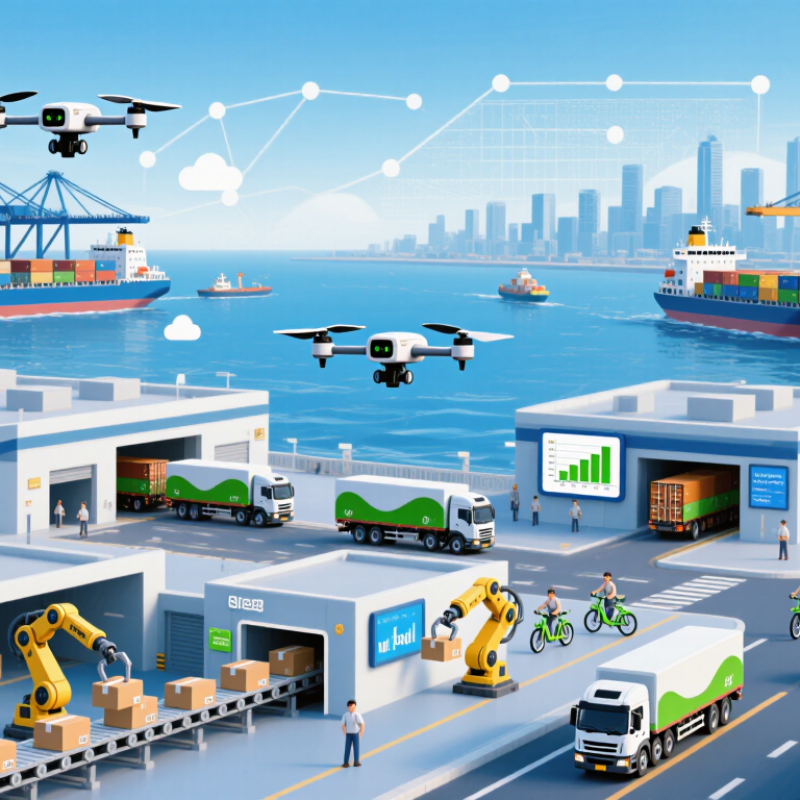
China’s role in global e-commerce logistics is becoming more connected and data-driven. Exporters now combine factory planning, bonded storage, rail, air, and ocean transport. This creates shorter handoff times between production and delivery. In many logistics centers, scanners record parcel dimensions before sorting. That small step reduces loading errors and improves shipping estimates.
Cross-border sellers also use regional warehouses to place popular products closer to customers. This can reduce delivery distance and make returns more manageable. However, fast fulfillment is not always simple. Customs rules, product documentation, seasonal demand, and local delivery capacity can change quickly. A shipment may leave China on schedule but still face delays at its destination. Better tracking helps, but tracking data can also be incomplete.
Tips: Prepare accurate invoices and product details before dispatch. Use two transport options during peak seasons. Test warehouse stock levels with real order data. Keep a clear returns process for each market. Do not treat low shipping cost as the only goal. In practice, some businesses overestimate automation and underestimate communication. Local partners may notice problems earlier than dashboards. Regularly review delivery times, damage reports, and customer feedback. Small operational corrections often protect reliability better than dramatic network changes.
China’s logistics transformation is driven by scale, speed, and demanding online shoppers. The State Post Bureau reported 174.5 billion express parcels in 2024, up 21.5% year on year. That volume forces warehouses to move beyond manual sorting. Automated conveyors, route algorithms, and local fulfillment centers now shorten the distance between a phone order and a doorstep delivery.
Speed is only one driver. The China Federation of Logistics and Purchasing reported China’s total social logistics value reached about 360.6 trillion yuan in 2024. Such scale encourages shared warehouses, multimodal transport, and digital freight matching. Cross-border e-commerce also increases the need for accurate customs data, recyclable packaging, and better inventory visibility. The World Bank’s 2023 Logistics Performance Index placed China 19th globally, showing strong capability but also room for improvement.
The transformation remains uneven. A modern warehouse may use robots, while a rural route still depends on a small vehicle and handwritten adjustments. Data quality is another weak point. Systems can predict demand, but sudden promotions, weather, and regional habits still disrupt forecasts. The International Energy Agency notes that transport electrification is expanding, yet charging access and battery endurance remain practical constraints for heavy logistics. Efficiency is improving. It is not finished.
Ten Major Logistics Trends in Cross-Border E-Commerce
Cross-border e-commerce logistics is becoming faster, more digital, and more regional. The first trends are multimodal transport, regional fulfillment, and smaller local inventories. UNCTAD’s Review of Maritime Transport 2023 states that ships carry over 80% of global merchandise trade. However, air and rail services remain important for urgent, high-value parcels. Customs digitization is also expanding. Electronic documents, automated duty calculation, and risk-based inspections can reduce border delays. Still, data quality often decides whether technology works.
Other major trends include AI demand forecasting, warehouse automation, real-time parcel tracking, parcel lockers, greener delivery, and smarter returns. The World Bank’s Logistics Performance Index 2023 evaluates 139 economies through customs, infrastructure, logistics services, tracking, and timeliness. Its results show that visibility and reliability remain uneven across markets. The International Transport Forum’s Transport Outlook 2023 also warns that transport emissions may rise without stronger efficiency measures. My field observation is simple: customers accept longer routes when tracking is honest. They dislike silent delays more than distance.
Tips: Keep two delivery plans for peak periods. Test customs data before scaling. Measure failed deliveries, return miles, and clearance time separately. Forecasting tools can be useful, but they are not perfect. A sudden promotion, weather event, or policy change can break a clean model. Review exceptions manually, especially when entering a new country.
China’s logistics sector is reshaping global e-commerce through ten connected trends: warehouse automation, intelligent routing, cross-border fulfillment, digital customs, multimodal transport, parcel lockers, green packaging, cold-chain upgrades, rural delivery, and real-time data systems. These developments reduce handling delays and improve shipment visibility from factory gates to overseas homes.
The global supply chain benefits from China’s dense delivery networks and high-volume operating experience. Automated sorting can process thousands of parcels daily, while predictive routing helps carriers avoid port congestion and severe weather. Overseas warehouses also move inventory closer to customers, reducing delivery distances and return pressure. Digital documentation may shorten customs processing, but standards still differ between countries. That gap creates friction.
There are limits. Fast delivery can increase packaging waste, energy use, and pressure on transport workers. Some smaller suppliers cannot afford advanced systems or reliable data connections. Cold-chain expansion also requires strict temperature monitoring across borders. In practical audits, one missing scan can distort an entire shipment record. That sounds minor. It is not.
Supply chain managers should compare speed with resilience, cost, emissions, and regulatory requirements. Shared data standards could improve cooperation between manufacturers, ports, carriers, and local authorities. Yet technology alone cannot solve weak infrastructure or unclear responsibilities. China’s logistics trends offer useful methods, but each market needs careful testing, local expertise, and room to correct mistakes.
| Rank | Logistics Trend | Verified China Indicator | Latest Reference Period | Global E-Commerce and Supply Chain Impact | Primary Reference |
|---|---|---|---|---|---|
| 1 | Express Delivery Scale-Up | China handled approximately 174.5 billion express parcels, with express-delivery business revenue of about 1.4 trillion yuan. | 2024 | High parcel density supports lower average fulfillment costs, faster delivery cycles, and more frequent cross-border shipment consolidation. | China State Post Bureau |
| 2 | Cross-Border E-Commerce Expansion | China’s cross-border e-commerce import and export value reached approximately 2.63 trillion yuan, including about 1.83 trillion yuan of exports. | 2023 | Demand is increasing for bonded inventory, international parcel networks, localized returns, customs automation, and regional overseas fulfillment. | General Administration of Customs of China |
| 3 | China–Europe Rail Freight Development | China–Europe freight trains completed about 19,000 trips and transported approximately 2.07 million TEUs. | 2024 | Rail provides a middle option between ocean and air freight, improving resilience for time-sensitive goods and reducing dependence on single maritime corridors. | China National Railway Administration |
| 4 | Smart Warehousing and Automation | China’s logistics sector continues to deploy automated storage, sorting, machine vision, robotics, and warehouse-management systems to handle high-volume and multi-SKU operations. | 2023–2024 | Automation improves inventory accuracy, order throughput, labor productivity, and peak-season capacity across domestic and international fulfillment centers. | China Federation of Logistics and Purchasing; Ministry of Industry and Information Technology |
| 5 | Digital Freight and Visibility Platforms | Electronic waybills, transport-management systems, digital customs documents, real-time tracking, and data-based route planning are becoming standard tools in large logistics corridors. | 2023–2024 | Greater shipment visibility enables more accurate delivery promises, proactive exception management, and better coordination among sellers, carriers, ports, and customs authorities. | Ministry of Transport of China; National Development and Reform Commission |
| 6 | Green and Low-Carbon Logistics | China is expanding the use of electric delivery vehicles, reusable packaging, photovoltaic logistics facilities, rail transport, and energy-efficiency standards for warehouses and distribution centers. | 2023–2024 | Lower-emission delivery models help exporters meet environmental requirements, reduce urban delivery restrictions, and improve the carbon profile of international supply chains. | Ministry of Transport of China; National Development and Reform Commission |
| 7 | Rural and Lower-Tier Delivery Networks | Rural areas accounted for more than 55 billion express parcels in 2023, supported by expanded county-level distribution and village collection networks. | 2023 | Broader last-mile coverage increases access to online retail, expands the seller base, and connects agricultural products with domestic and overseas consumers. | China State Post Bureau |
| 8 | Bonded Warehousing and Customs Facilitation | Cross-border e-commerce increasingly uses bonded import zones, simplified declarations, electronic customs processing, and distributed inventory close to major consumer markets. | 2023–2024 | These mechanisms shorten customs lead times, support smaller-batch international sales, and reduce the need to ship every order individually from the country of origin. | General Administration of Customs of China |
| 9 | Cold-Chain and Fresh-Product Logistics | China continues to invest in refrigerated transport, temperature-controlled storage, traceability systems, and regional cold-chain distribution for food, medicine, and other sensitive products. | 2023–2024 | Improved temperature control creates new opportunities for cross-border fresh food and healthcare commerce while reducing spoilage and compliance risks. | National Development and Reform Commission; Ministry of Transport of China |
| 10 | Logistics Cost Optimization and Network Resilience | China’s total social logistics cost was approximately 14.4% of GDP in 2023, encouraging continued investment in multimodal transport, consolidation, standardized packaging, and regional distribution hubs. | 2023 | Lower logistics intensity can improve export competitiveness, while diversified transport routes and inventory locations help reduce disruption exposure. | China Federation of Logistics and Purchasing |
Note: Monetary figures are reported in Chinese yuan. Indicators use the latest publicly reported period available for each topic and are intended for comparative trend analysis.
Delivery networks now need stronger resilience. Extreme weather, port congestion, and sudden demand changes can delay parcels for days. Real-time tracking helps, but inaccurate data can mislead customers and operators.
The industry needs shared data standards, clearer shipment visibility, and better cooperation between transport modes. Rural delivery is another difficult area, where low parcel volumes can make efficient service expensive. Flexible local distribution points may reduce this gap.
Future development will depend on cleaner vehicles, recyclable packaging, and energy-efficient warehouses. Artificial intelligence can forecast demand, yet it should not replace professional judgment. The industry still guesses. Returns also require more attention, especially when cross-border procedures create extra handling and storage costs. Compliance with customs, consumer protection, and environmental rules must remain central. China’s logistics sector has strong engineering experience, but its future progress may depend less on faster machines and more on honest data, skilled workers, and systems that remain reliable under pressure.
It is becoming more connected, automated, and guided by shipment data. Factories, warehouses, railways, aircraft, and ships now work together more closely. Handoffs can become faster, though not always smoother.
They place popular products closer to customers. This can shorten delivery distances and make returns easier to manage. A nearby warehouse helps, but poor stock planning can still create delays.
Sellers should prepare accurate invoices, product descriptions, package sizes, and destination details. Clear documents may reduce customs questions. Small errors matter.
No. Tracking improves visibility, but some scans may be missing or delayed. One missing scan can distort an entire shipment record. Dashboards do not show everything.
Peak seasons can overload ports, airports, warehouses, and local delivery networks. Combining ocean, rail, air, or other suitable methods can reduce dependency on one route. It may cost more.
Fast delivery can increase packaging waste, energy use, and pressure on transport workers. It may also encourage unrealistic customer expectations. Speed is useful, but it is not the whole goal.
Scanners can record parcel dimensions before sorting. Automated systems can process thousands of parcels daily and reduce loading mistakes. Still, machines need accurate data and regular checks.
They should review delivery times, damage reports, stock levels, returns, emissions, and customer feedback. Local partners may notice problems before digital systems do. Communication is sometimes underestimated.
Customs standards, delivery capacity, product documents, and return practices differ between markets. A method that works in one country may fail elsewhere. Local testing is necessary.
Test warehouse stock with real orders, keep clear return procedures, and compare transport costs with resilience. Make small corrections regularly. Big changes are not always better.
China has become a central force in global e-commerce logistics, supported by advanced manufacturing capacity, extensive transportation networks, digital commerce growth, and continuous investment in automation and data systems. As consumer expectations rise, logistics providers are improving warehouse coordination, delivery visibility, inventory planning, and cross-border distribution to create faster, more flexible, and more reliable fulfillment services. These changes are also helping businesses connect regional production with international markets more efficiently.
The major Logistics Trends In Global E-Commerce Fulfillment include intelligent warehousing, real-time shipment tracking, multimodal transportation, localized inventory, greener operations, automated sorting, data-driven forecasting, flexible last-mile delivery, integrated customs coordination, and stronger supply chain resilience. Together, these trends are reshaping global trade by reducing delays, improving cost control, and supporting more responsive customer service. However, the industry still faces challenges such as complex regulations, uneven infrastructure, rising operating costs, environmental pressure, and supply disruptions. Future development will depend on responsible innovation, international cooperation, workforce development, and adaptable logistics networks.
