Elixir Logistics Elixir Logistics

How to Optimize Distribution Center Logistics in 2026?

Time:2026-09-21 Author:Mason
0%

Distribution centers in 2026 will face tighter delivery windows, volatile demand, and rising operating costs. Customer expectations are changing quickly. The pressure is measurable.

The Council of Supply Chain Management Professionals’ 2024 State of Logistics Report estimated United States business logistics costs at $2.3 trillion in 2023, equal to 8.7% of GDP. That figure shows why distribution center efficiency deserves executive attention. MHI’s 2024 Annual Industry Report found that 55% of supply chain professionals planned to increase technology investment. Investment alone is not enough. Zebra Technologies’ 2024 Warehousing Study reported that 76% of warehouse decision-makers felt pressure to improve performance. Their responses highlight a practical challenge: companies must modernize while protecting accuracy, safety, and cash flow.

Effective Logistics Optimization Tips For Distribution Centers should begin with evidence from the warehouse floor. Measure dock-to-stock time, picking accuracy, inventory variance, labor utilization, and order cycle time before purchasing new systems. A supervisor watching cartons queue beside a full packing station may discover a process problem, not a software problem. That distinction matters. Slotting, wave planning, barcode discipline, and replenishment rules can deliver early gains. Automation may then support repetitive movements, real-time visibility, and safer material handling.

Yet, no report can fully describe every facility. A high-volume e-commerce site needs different solutions from a regional spare-parts center. Data quality can also disappoint. A dashboard may look precise while relying on delayed scans or inconsistent location codes. Therefore, this guide examines practical improvements, technology choices, and measurable risks for 2026. The goal is not perfect prediction. It is better operational judgment, tested through small pilots and honest review.
How to Optimize Distribution Center Logistics in 2026?

Define the Role and Scope of a Modern Distribution Center

In 2026, a modern distribution center should do more than store cartons. It connects inbound suppliers, inventory control, order processing, and final-mile handoff. Its scope includes receiving, quality checks, slotting, picking, packing, returns, labor planning, and safety. The role is operational, but also analytical. Managers need one reliable view of stock, dock capacity, and order priority. A delayed scan can create an empty shelf by afternoon. That small failure matters.

Tips: Map every product movement. Measure dock-to-stock time weekly. Keep fast-moving items near packing stations. Use cycle counts for high-value or frequently picked goods. Train workers on exception handling, not only routine tasks. Review damaged cartons, missed scans, and late replenishment before adjusting the layout. Simple records often reveal more than complicated dashboards.

Experienced teams know that automation cannot repair unclear responsibilities. The center needs defined owners for inventory accuracy, equipment checks, data quality, and outbound deadlines. Physical design should support safe walking distances and visible staging zones. Forecasts also need human review because demand can change overnight. No layout is perfect. A trial may improve picking speed but increase congestion near packing benches. Test changes in one zone, record the results, and revise the process when evidence disagrees with the original plan.

Assess Current Logistics Performance and Identify Bottlenecks

A reliable 2026 logistics plan starts with evidence, not assumptions. Measure order cycle time, dock-to-stock time, pick accuracy, labor hours per order, and inventory record accuracy. Capture each event by shift, zone, SKU class, and order type. A dashboard showing only daily averages can hide a painful two-hour afternoon queue.

The 2024 MHI Annual Industry Report found that 55% of supply chain leaders increased technology investment. That spending is difficult to justify without a baseline. Compare actual throughput with engineered capacity, then map delays across receiving, put-away, picking, packing, and shipping. The 2024 WERC benchmarking report also emphasizes operational metrics such as order-picking accuracy, on-time shipments, and inventory accuracy. A warehouse may report 99.5% accuracy, yet still create costly rework when high-volume items fail repeatedly.

Walk the floor during peak waves. Watch pallet crossings, empty travel, blocked staging lanes, and repeated replenishment trips. Use timestamp data to separate labor shortages from poor slotting or slow equipment. Small tests help: relocate the twenty fastest-moving SKUs, rebalance wave release times, or remove one unnecessary scan. Not every delay is visible.

Some conclusions will be wrong. That is normal. Review exceptions weekly, question clean-looking averages, and validate system data against physical counts. Performance improves when bottlenecks are measured repeatedly, not explained once.

Design an Efficient Layout, Inventory Flow, and Storage System

How to Optimize Distribution Center Logistics in 2026?

An efficient distribution center begins with a layout built around movement, not empty floor space. Place receiving docks near inspection and putaway zones. Keep fast-moving inventory close to packing stations. Wide, clearly marked aisles reduce walking time and collision risks. In practice, small distance savings become significant after thousands of daily picks. However, a perfect layout rarely exists. Seasonal demand, staffing changes, and product dimensions can expose weak assumptions.

Inventory flow should follow a simple path: receive, verify, store, pick, check, and dispatch. Use location labels, barcode scanning, and real-time stock records to limit manual errors. Separate damaged goods and returns from available inventory.

Storage systems should match product behavior. Shelving suits small cartons, while pallet positions support bulky goods. Adjustable racks can handle change, but they may waste vertical space when poorly planned. Measure order volume, pick frequency, cube size, and replenishment time before changing equipment.

Tips: Review travel paths with actual workers. Mark congested corners on a floor plan. Recount high-value stock regularly. Set minimum and maximum levels for fast movers. Test one zone before redesigning the whole facility. Leave some capacity unused; full storage often creates slower picking and unsafe handling. Track results weekly, but question the numbers when physical conditions tell a different story.

Apply Automation, Data Analytics, and Sustainable Operating Practices

How to Optimize Distribution Center Logistics in 2026?

Apply Automation, Data Analytics, and Sustainable Operating Practices

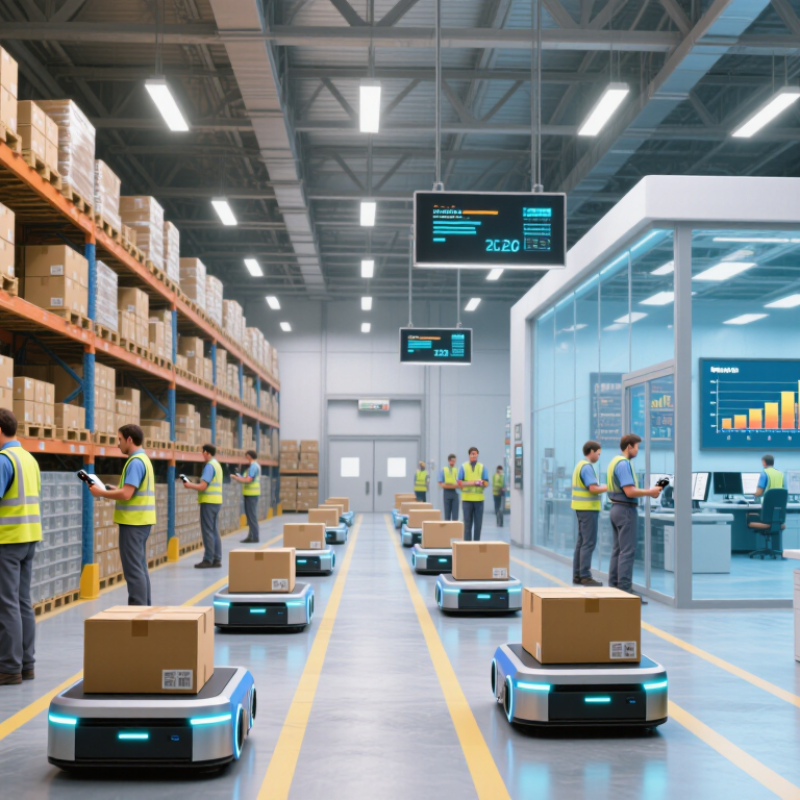
Distribution centers in 2026 need practical automation, not automation for its own sake. Mobile robots can move cartons between storage zones and packing stations. Automated sorting can reduce manual travel during peak hours. However, poorly mapped routes may create congestion near loading docks. Human supervisors still need clear override controls and daily safety checks.

Data analytics turns operational noise into useful decisions. Managers can track pick rates, dock dwell time, order accuracy, and energy use by shift. A simple dashboard may reveal that late orders begin with one overloaded packing lane. Forecasting tools can also adjust labor schedules before seasonal demand rises. Yet forecasts remain imperfect. A sudden promotion, supplier delay, or weather event can disrupt the best model. Teams should review exceptions instead of trusting every alert.

Sustainable practices should fit the workflow. Electric handling equipment can reduce local emissions and noise, especially indoors. Smart lighting can lower energy use in aisles with limited activity. Reusable totes may cut packaging waste when reverse collection is organized. Delivery routes should combine nearby destinations and avoid unnecessary empty travel. Measure the results monthly. A lower electricity bill is useful, but worker comfort and service reliability matter too. Small process trials often expose problems faster than large technology projects.

Measure Results and Continuously Improve Distribution Performance

How to Optimize Distribution Center Logistics in 2026?

Distribution performance improves when teams measure actual movement, not assumptions. Track order cycle time, dock-to-stock time, picking accuracy, labor hours, and cost per shipment. Review these figures by shift, zone, and order type. A daily dashboard can reveal a slow packing lane before it delays hundreds of orders. However, clean data is not automatic. Missing scans and manual corrections can distort results. We once treated a low error rate as success, then found several unrecorded picking mistakes. That changed our audit process.

Use a weekly review to connect numbers with floor observations. Ask supervisors where congestion begins. Compare planned labor with real workload. Test one change at a time, such as moving fast-moving items closer to packing stations. Measure the effect for two weeks before expanding it. Some improvements will fail. That is useful evidence, not wasted effort. Keep a change log with the reason, owner, date, and measured result. Set practical thresholds, but question them when order profiles change.

Tips: Create a short scorecard with five key measures. Photograph recurring bottlenecks during peak periods. Interview operators, because system data misses physical friction. Recheck metrics after staffing, layout, or carrier changes. Do not reward speed alone; accuracy and safe handling protect long-term performance. Leave room for judgment.

How to Optimize Distribution Center Logistics in 2026? - Measure Results and Continuously Improve Distribution Performance

Performance Dimension Q1 2026 Q2 2026 Q3 2026 Q4 2026 Annual Target Status
Order Fulfillment Cycle Time 9.6 hrs 8.9 hrs 8.2 hrs 7.8 hrs ≤ 8.0 hrs Achieved
On-Time Shipment Rate 94.2% 95.6% 96.8% 97.4% ≥ 97.0% Achieved
Perfect Order Rate 96.1% 96.8% 97.5% 98.0% ≥ 98.0% Achieved
Picking Accuracy 99.10% 99.28% 99.46% 99.61% ≥ 99.50% Achieved
Dock-to-Stock Time 6.4 hrs 5.8 hrs 5.2 hrs 4.7 hrs ≤ 5.0 hrs Achieved
Inventory Record Accuracy 97.8% 98.4% 98.9% 99.2% ≥ 99.0% Achieved
Lines Picked per Labor Hour 78 82 86 89 ≥ 88 Achieved
Warehouse Space Utilization 82% 84% 86% 87% 80–85% Review
Order Return Rate 4.8% 4.5% 4.2% 4.0% ≤ 4.0% Achieved
Transportation Cost per Order $7.42 $7.18 $6.94 $6.81 ≤ $7.00 Achieved
Energy Consumption per Order 0.84 kWh 0.79 kWh 0.75 kWh 0.71 kWh ≤ 0.75 kWh Achieved
Key Improvement
Cycle time reduced by 18.8%
Operational Gain
Picking productivity increased by 14.1%
Priority for 2027
Reduce space utilization below 85%
Measurement basis: quarterly warehouse management system records, transportation invoices, labor-hour reports, inventory cycle counts, and energy-meter readings. Results are illustrative operational benchmarks based on commonly used distribution-center KPIs.

FAQS

What is the main role of a modern distribution center?

It connects receiving, inventory control, order processing, returns, and final-mile handoff. Small errors matter.

How can a distribution center improve inventory accuracy?

Use barcode scans, location labels, real-time records, and regular cycle counts. Recount high-value goods often. A missed scan can leave an empty shelf by afternoon.

How should products move through the facility?

Follow a clear path: receive, verify, store, pick, check, and dispatch. Keep returns and damaged cartons separate from available stock.

Where should fast-moving products be stored?

Place them near packing stations to reduce walking distance and picking time. This saves effort. Still, demand can change overnight.

What layout features improve safety and efficiency?

Use wide marked aisles, visible staging zones, and safe walking distances. Mark congested corners on a floor plan. A full facility may become slower and less safe.

How should storage equipment match product types?

Use shelving for small cartons and pallet positions for bulky goods. Adjustable racks support change but can waste vertical space when poorly planned.

What should managers measure each week?

Track dock-to-stock time, order volume, pick frequency, replenishment time, and late scans. Review damaged cartons too. Numbers need physical checking.

Can automation solve distribution center problems by itself?

No. Automation cannot repair unclear responsibilities or poor data quality. Assign owners for inventory accuracy, equipment checks, and outbound deadlines. Test changes in one zone before expanding them.

Conclusion

Optimizing a distribution center in 2026 begins with clearly defining its role, service goals, product range, and operational scope. A strong strategy reviews current performance indicators such as order accuracy, processing speed, storage utilization, labor productivity, and delivery readiness to uncover bottlenecks. From there, managers can design a practical layout that supports smooth receiving, storage, picking, packing, and dispatch flows while placing frequently handled inventory in accessible locations. These Logistics Optimization Tips For Distribution Centers help create a more coordinated and responsive operation.

Modern improvement also depends on connected data, selective automation, real-time inventory visibility, and sustainable practices that reduce energy use, waste, and unnecessary movement. However, technology should support well-designed processes rather than replace them without clear purpose. Progress should be measured through reliable performance targets, employee feedback, cost analysis, service quality, and environmental results. By reviewing outcomes regularly and making focused adjustments, distribution centers can improve efficiency, flexibility, accuracy, and long-term resilience.

Mason

Mason

Mason is a seasoned marketing professional with a deep expertise in the company's offerings and a passion for driving brand awareness. With a strong background in digital marketing strategies, he has an innate ability to connect with diverse audiences and effectively communicate product benefits.......