Elixir Logistics
In today's fast-paced world, logistics automation is reshaping the warehousing landscape. Many businesses are realizing the Logistics Automation Benefits For Warehouses. Automation can enhance efficiency, reduce costs, and improve accuracy. Imagine a warehouse that operates like a well-oiled machine, with robots managing inventory and software optimizing routes.
However, the transition to automation is not without challenges. Some warehouses face resistance from employees who fear job loss. Others struggle with the upfront investment required for new technologies. It’s essential to address these concerns while highlighting the long-term advantages of automation.
Moreover, investing in training and support can ease this transition. Employees can learn to work alongside technology, enhancing productivity. As warehouses embrace logistics automation, they must adapt to a new way of working. The journey may be tough, but the potential rewards make it worthwhile.
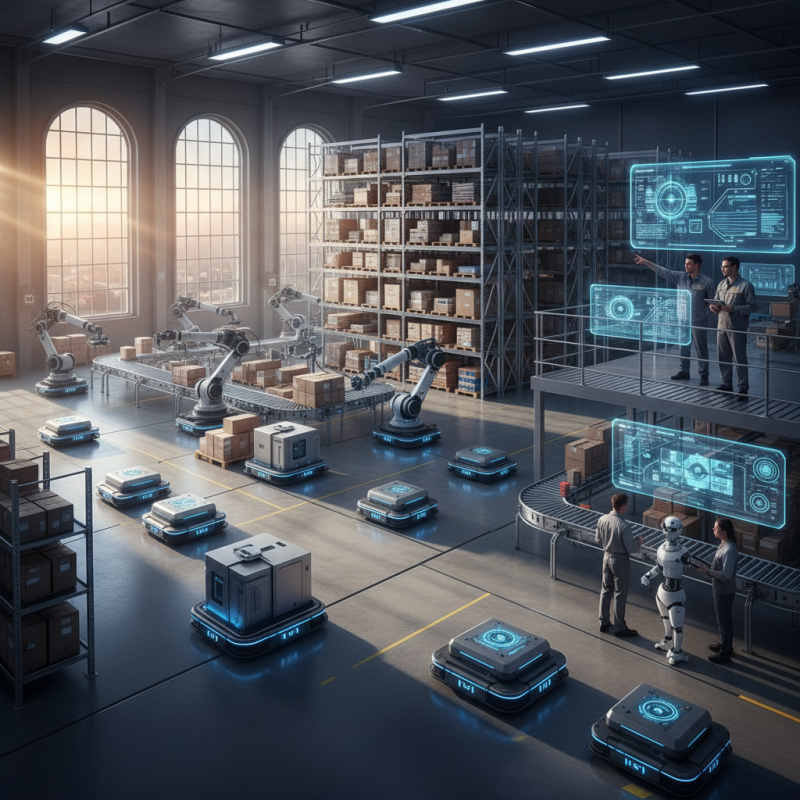
Logistics automation is transforming warehouse efficiency. This technology enhances operations by reducing human errors and streamlining processes. For instance, automated systems can track inventory levels in real-time. This allows for accurate stock management and timely restocking. Warehouse staff can focus on complex tasks rather than routine checks.
Moreover, logistics automation optimizes space utilization. Automated storage and retrieval systems maximize storage density. They reduce the time workers need to locate and retrieve items. For example, vertical lift modules store products in stacked configurations. This leads to better use of vertical space and accelerates order fulfillment.
However, implementing these systems comes with challenges. The initial investment can be significant, and staff may need retraining. Some may resist changes that affect their routine. A balance between automation and human labor must be sought. Adopting automation does not eliminate the need for skilled workers. Instead, it augments their capabilities, allowing for a more efficient operation.
Logistics automation is transforming the landscape of warehousing. One of the most compelling reasons to embrace this shift is the significant reduction in costs. Automating repetitive tasks minimizes labor expenses. This leads to a more efficient operational model. Workers can focus on higher-value activities. This change often results in enhanced productivity.
Moreover, automation helps in optimizing space utilization. Real-time data allows for better inventory tracking. Warehouses can manage stock levels more effectively. This reduces overstocking and understocking issues. However, the integration of automation technologies can be complex. Some warehouses might struggle with initial setup costs. Addressing these challenges is vital for a smooth transition.
Employing automated systems does not guarantee results without proper training. Staff may face a learning curve that impacts efficiency initially. Continuous evaluation and adjustment are essential. In spite of these challenges, the long-term benefits of cost reduction and improved accuracy make automation worthwhile. This trend in logistics is not just a fad; it's a necessary evolution in warehousing practices.
| Benefit | Description | Estimated Cost Reduction (%) | Implementation Time (Months) |
|---|---|---|---|
| Increased Efficiency | Automating processes speeds up operations, reducing time spent on manual tasks. | 25% | 6 |
| Reduced Labor Costs | Fewer workers needed as systems take over repetitive tasks. | 15% | 4 |
| Improved Accuracy | Automation reduces human error, leading to better inventory management. | 20% | 5 |
| Enhanced Data Analysis | Automated systems provide real-time data for informed decision making. | 10% | 3 |
| Faster Order Fulfillment | Automated picking and packing processes minimize delays. | 30% | 8 |
The role of automation in inventory management has become increasingly significant. According to recent studies, implementing automation technologies can reduce inventory holding costs by as much as 30%. This reduction significantly impacts a warehouse's bottom line.
Automated systems track inventory levels in real time, optimizing stock levels and preventing overstock or stockouts.
Moreover, automation enhances accuracy in inventory management. Traditional manual processes often lead to human errors, which can cost companies up to 5% of their total revenue. By integrating robotics and automated data capture, companies can limit these inaccuracies. This shift enables staff to focus on more complex tasks, improving overall productivity.
However, transitioning to automated systems is not without its challenges. Some warehouses face resistance from employees who fear job displacement. Additionally, many operations require initial high investments. This creates a barrier for smaller businesses. Organizations need to weigh the upfront costs against long-term benefits carefully. Embracing automation could reshape the future of inventory management, but reflection on the employee impact remains vital.
Logistics automation is transforming warehouses, crucially enhancing order accuracy and customer satisfaction. With automated systems, human error is significantly reduced. This leads to fewer mistakes in picking and packing orders. Accurate orders mean satisfied customers, which boosts loyalty and drives repeat business.
Tips for improving order accuracy: Regularly train staff on new technologies. Encourage communication between team members about the systems in place. Small errors can lead to bigger issues in the fulfillment process.
Investing in automated solutions can streamline workflows. Robots and software manage inventory levels efficiently. However, integrating new systems can be challenging. Identify potential obstacles early. A phased approach to automation can help ease transitions and minimize disruptions. Exploring technology's advantages will create a more productive work environment.
The future of logistics automation in warehousing is rapidly evolving. According to a report by McKinsey, industries embracing automation can expect a productivity increase of up to 30%. As warehouses implement robotics and AI technologies, they optimize workflows and reduce human error. This shift not only enhances efficiency but also reduces operational costs over time.
Market trends indicate a growing reliance on automated solutions. A recent Gartner report shows that over 60% of logistics companies plan to invest in automation within the next five years. Companies face challenges in adapting to these changes. Many are unsure about the initial investment costs and the transition phase. Moreover, training staff to work alongside these technologies poses an additional hurdle.
By 2025, the need for flexible automation systems will be paramount. As e-commerce accelerates, warehouses must respond quickly to demand changes. However, not all automated solutions fit every warehouse. Each facility has unique needs it must address to gain real benefits. Ignoring these specifics could lead to costly mistakes.
: Automation significantly reduces costs by minimizing labor expenses and enhancing productivity.
Automated systems reduce human error, resulting in fewer mistakes during picking and packing.
Initial setup costs and complexity can create obstacles for many warehouses during implementation.
Proper training helps staff overcome the initial learning curve, which impacts efficiency.
Encourage team discussions to address potential obstacles and share experiences with the new systems.
There's a rising reliance on automation, with over 60% of logistics firms planning to invest in it soon.
It optimizes inventory tracking, helping to manage stock levels effectively.
A gradual transition can minimize disruptions and allow time for adjustment.
As e-commerce grows, warehouses must adapt quickly to changing demand for better efficiency.
Each facility has unique needs; ignoring these specifics can lead to costly errors and inefficiencies.
Logistics automation benefits for warehouses are becoming increasingly crucial in optimizing warehouse operations. By implementing automation technologies, warehouses can significantly enhance efficiency, streamline processes, and reduce operational costs. These benefits extend to enhanced inventory management, allowing for better tracking and control of stock levels, which ultimately contributes to improved order accuracy. This increased precision not only boosts customer satisfaction but also strengthens the overall performance of the supply chain.
Moreover, as logistics automation continues to evolve, future trends are likely to introduce even more innovative solutions that will further enhance warehousing capabilities. Embracing these automation technologies is essential for warehouses looking to remain competitive in a rapidly changing market, ensuring they can meet demand while minimizing costs and improving service quality.
